

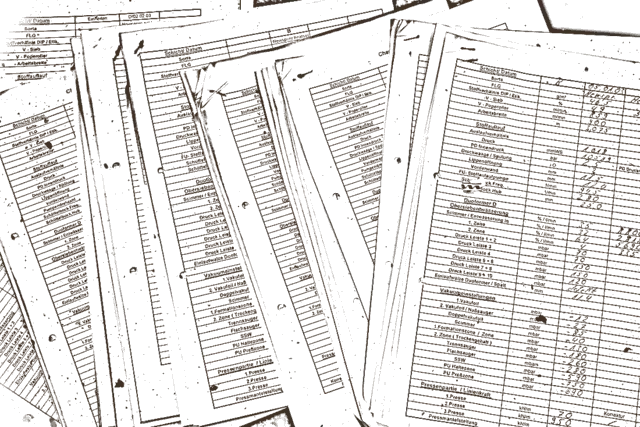



Intelligent document processing (IDP): definition
Definition
Intelligent document processing (IDP) reads content from documents, sorts it and hands it structured to a system. It combines text recognition with AI, so inconsistent invoices, contracts or forms are understood too, not just fixed templates. One example is reading invoice number, amount and date from differently designed receipts. It is the bridge from paper and PDF into an automated flow.
Why the Term Matters
Many flows start with a document, and that is exactly where work gets stuck because someone retypes fields. IDP breaks this bottleneck by understanding the content itself, even when every document looks different. For us it is the feeder for citable flows: what is read from a document can be used by a company brain or processed by an agent, with human approval on uncertainty.
When It Is Relevant
- Many documents in different layouts have to be read.
- Fields are retyped and transferred by hand so far.
- The content of a document should start a flow.
- Different templates make a fixed rule impossible.
When Not
When all documents share the exact same layout, a simple template recognition without AI often suffices. For very few documents the build rarely pays off. And without a check step on uncertain fields, IDP only shifts the error risk instead of lowering it, which is why approval belongs with it.
Industries That Use It
- Tax and accounting: invoices of every design are read and booked.
- Legal departments: contracts are searched for deadlines, parties and clauses.
- Logistics: delivery notes and freight papers are captured and reconciled.
- HR: application documents and certificates are captured in a structured way.
Typical Use Cases
- Read invoice number, amount and date from various receipts.
- Detect contract deadlines and parties from PDF documents.
- Turn incoming forms into structured records.
- Reconcile delivery notes with orders.
- Route uncertain fields to a human for review.
- Hand read content to a company brain or an agent.
Decision Guide
| Signal | IDP fits | Alternative |
|---|---|---|
| Documents in many layouts | AI reads and sorts | template recognition for fixed layout |
| Fields are retyped | read automatically | manual capture stays costly |
| Very few documents | rather not | capture once by hand |
| Uncertain fields possible | add a check step | avoid blind adoption |
Example
A team routes incoming invoices through document processing that detects number, amount and date regardless of layout. Confident fields flow on directly, uncertain ones go to a person for review. The results are then available in the company brain. This describes the method, not an asserted client metric.
Service Connection
IDP is often our first step before a company brain or an AI agent. For custom reading and check logic, custom GPT development complements the flow.
Sources
This framing describes common practice in intelligent document processing. Specific accuracy, rights and data protection depend on the documents, the chosen model and the check logic and must be checked case by case.